Mixed Media | 14 × 16 cm | 2026
On preservation, interruption, and the hardening of the living body
“This project was built during Iran’s war with the United States and Israel, just in time for a missile strike on Tehran.”
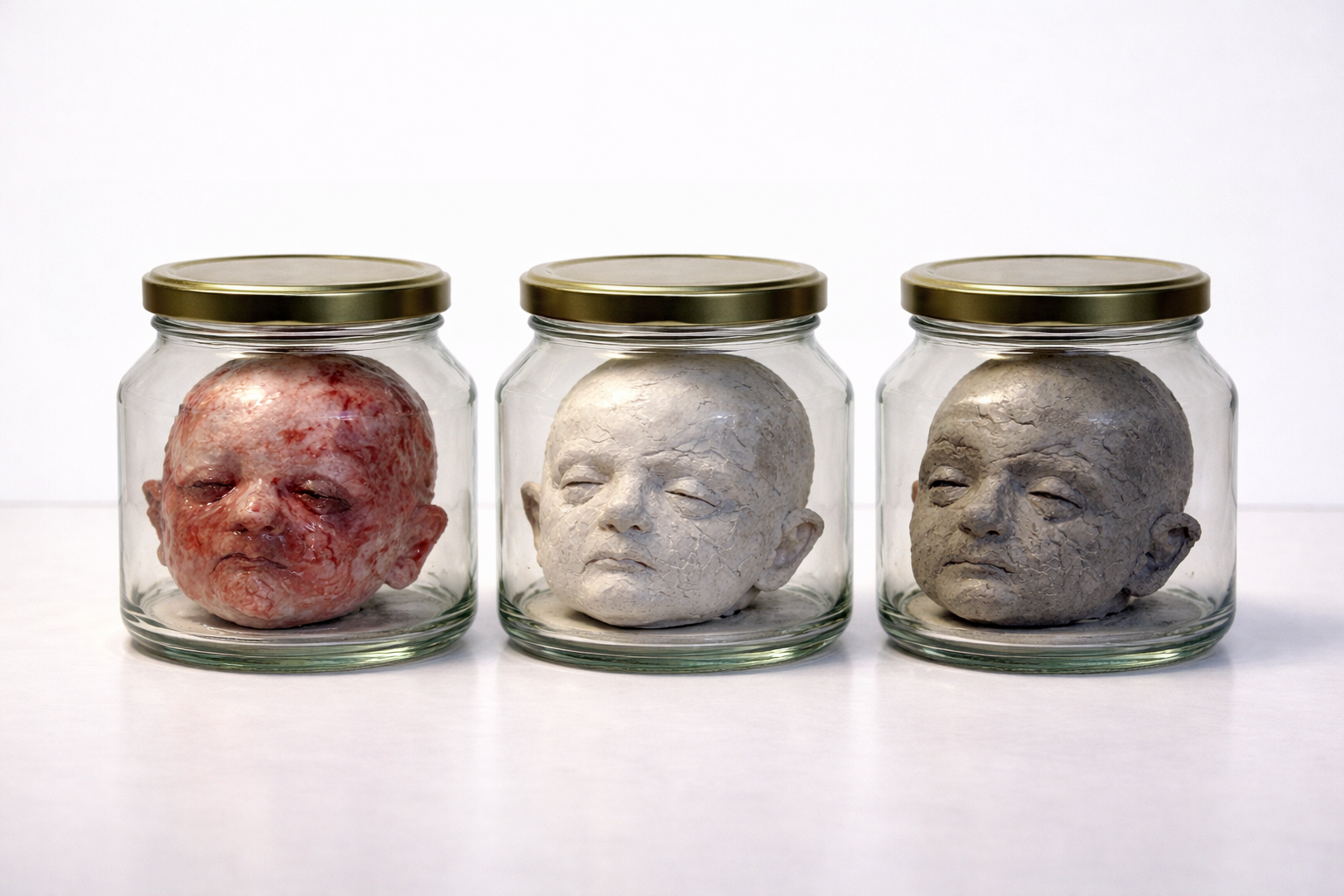
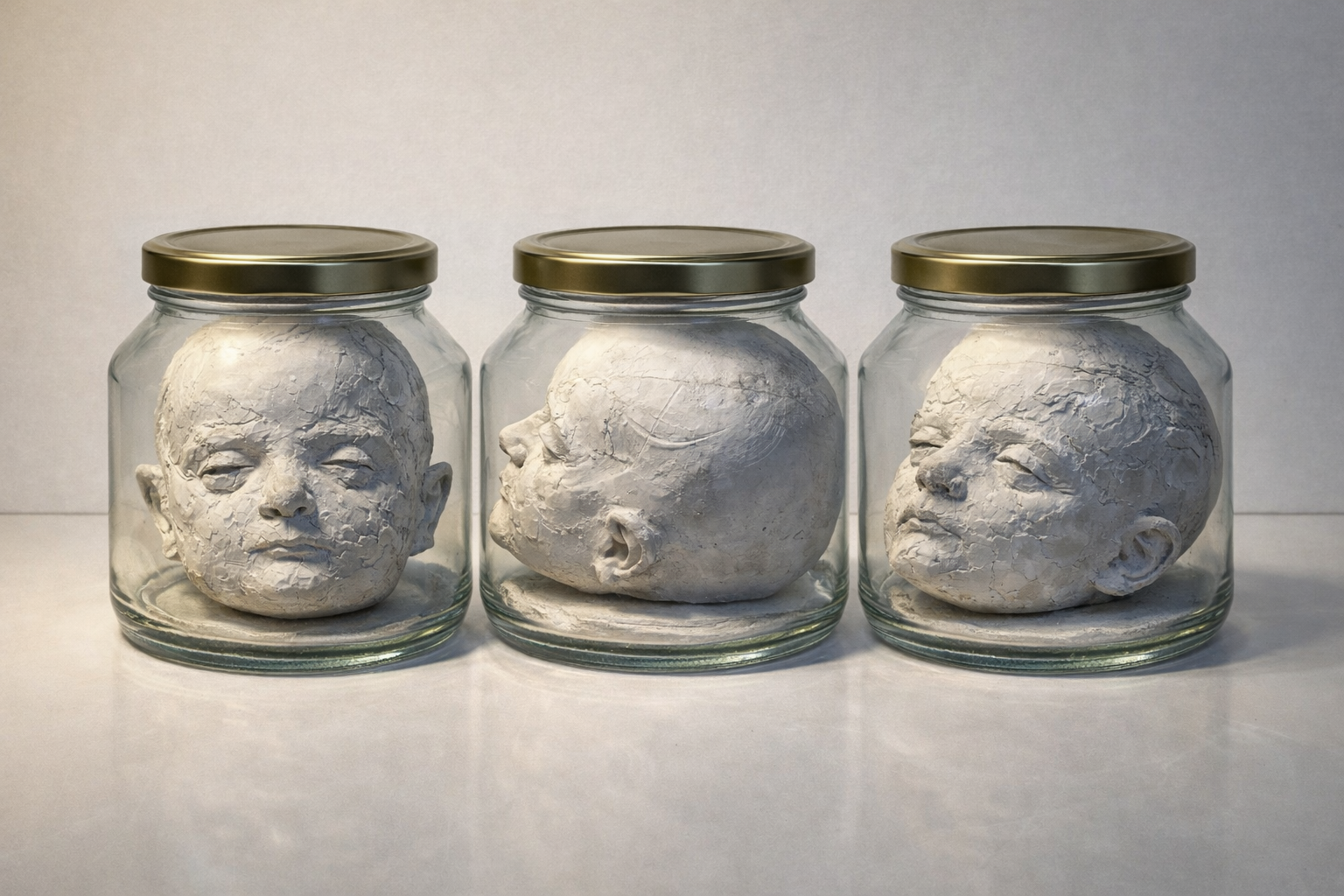
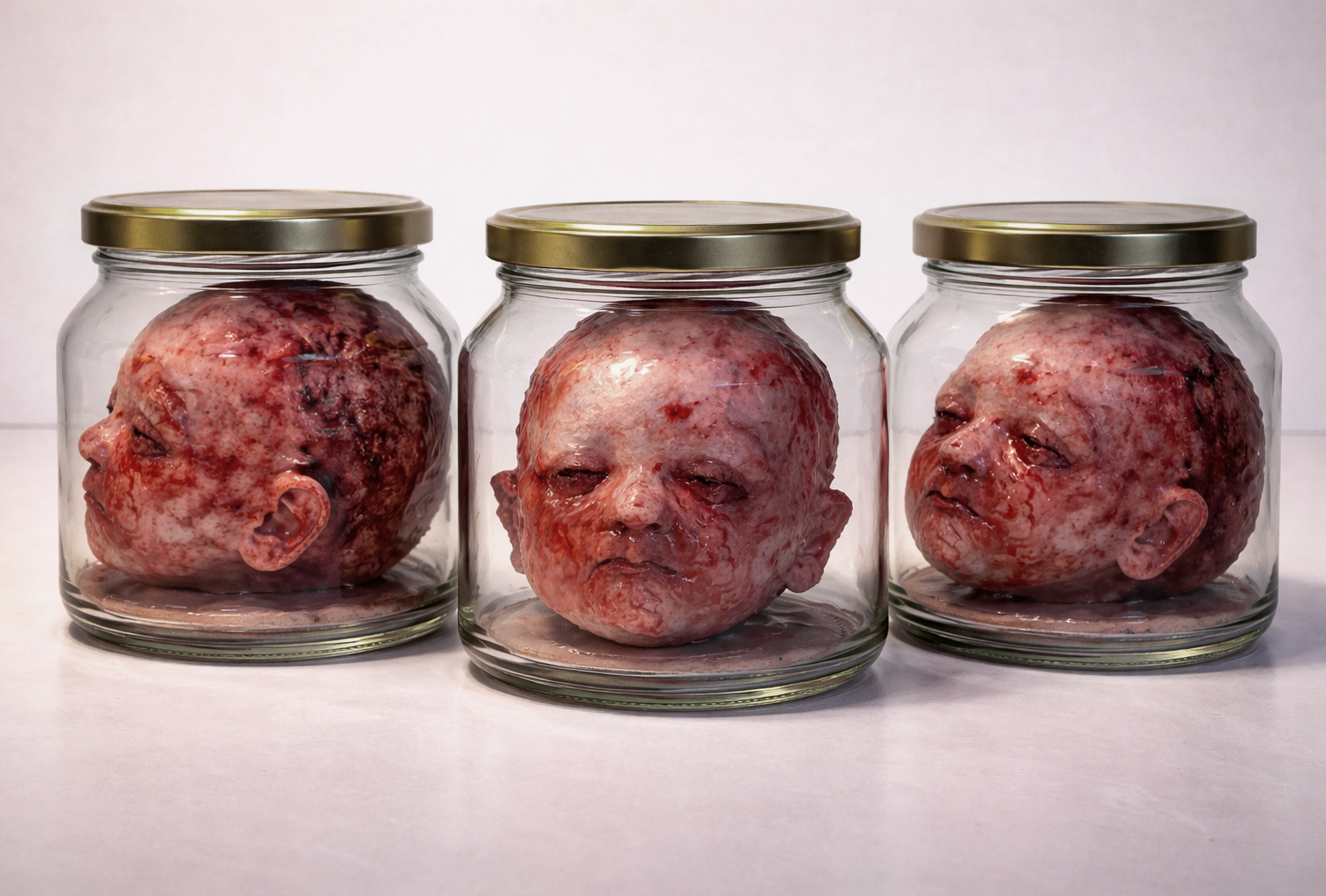
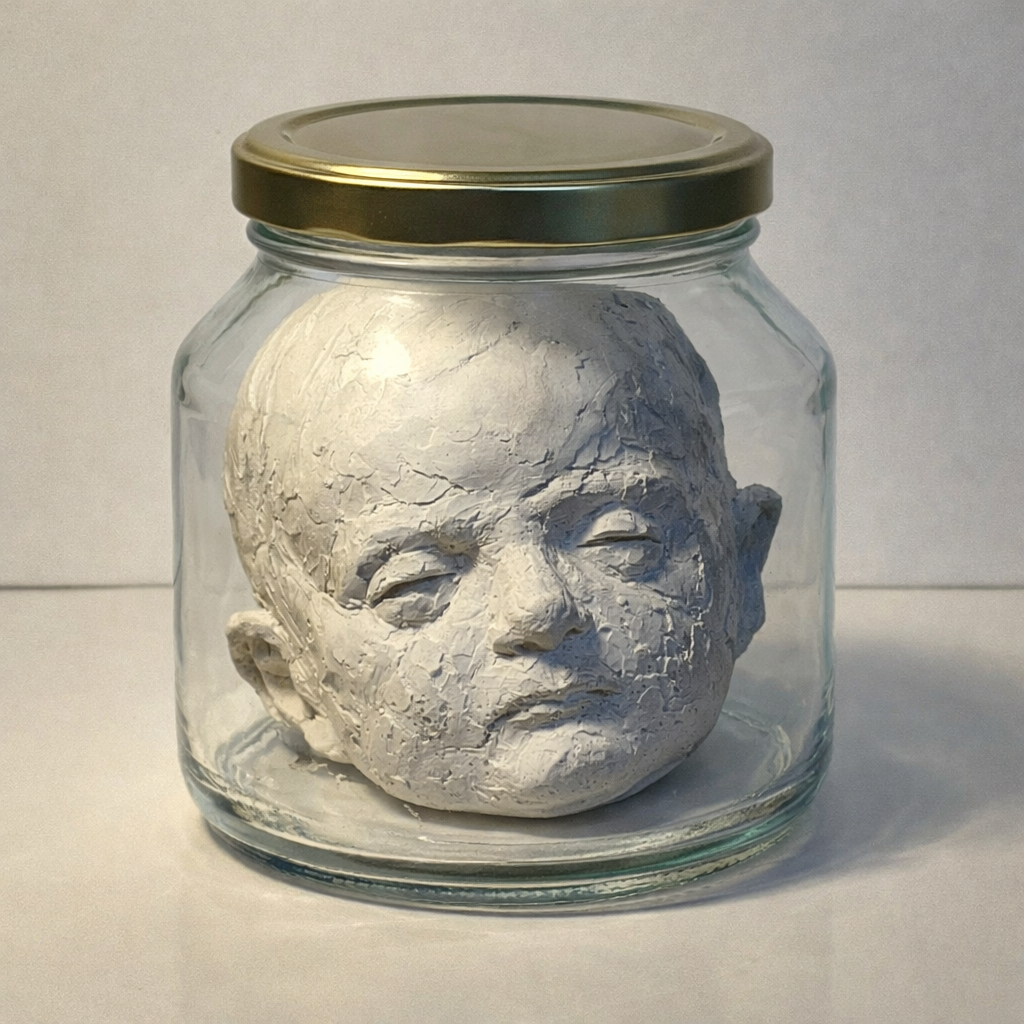
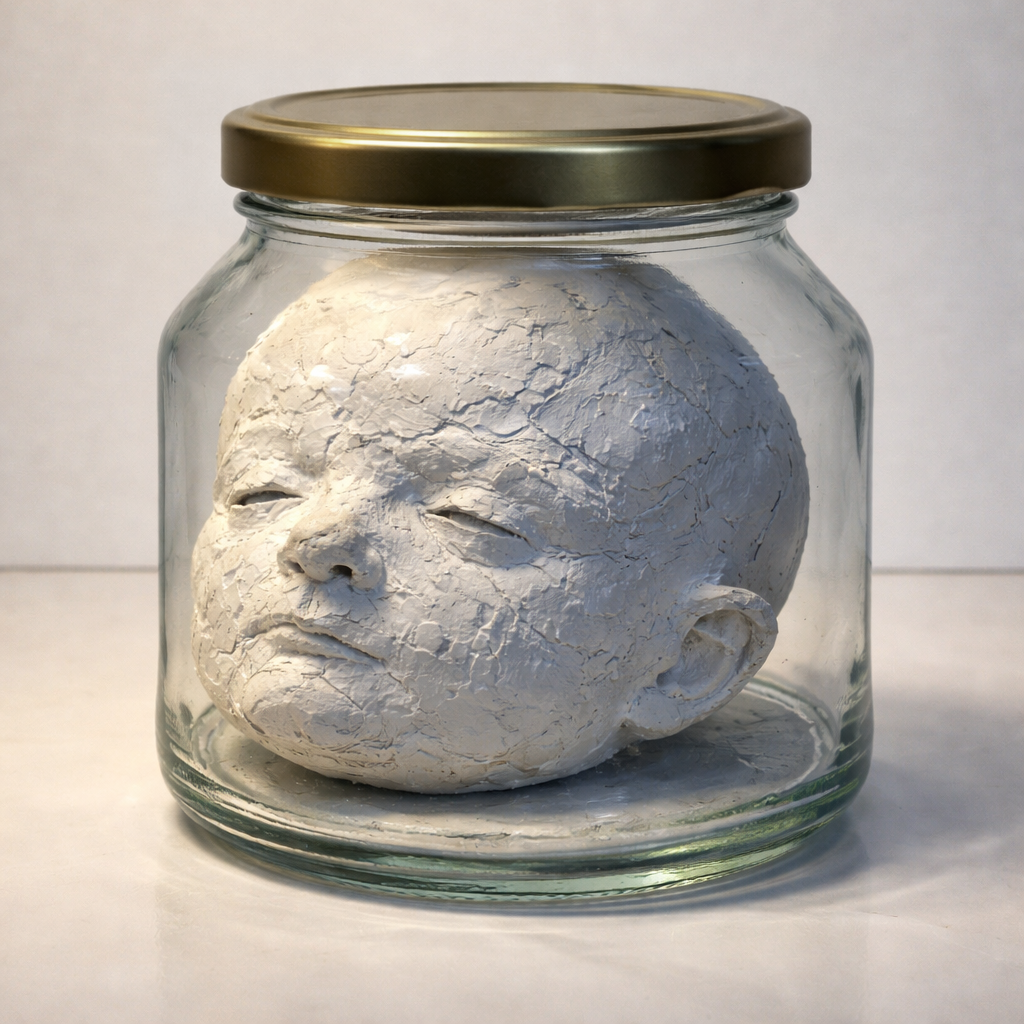
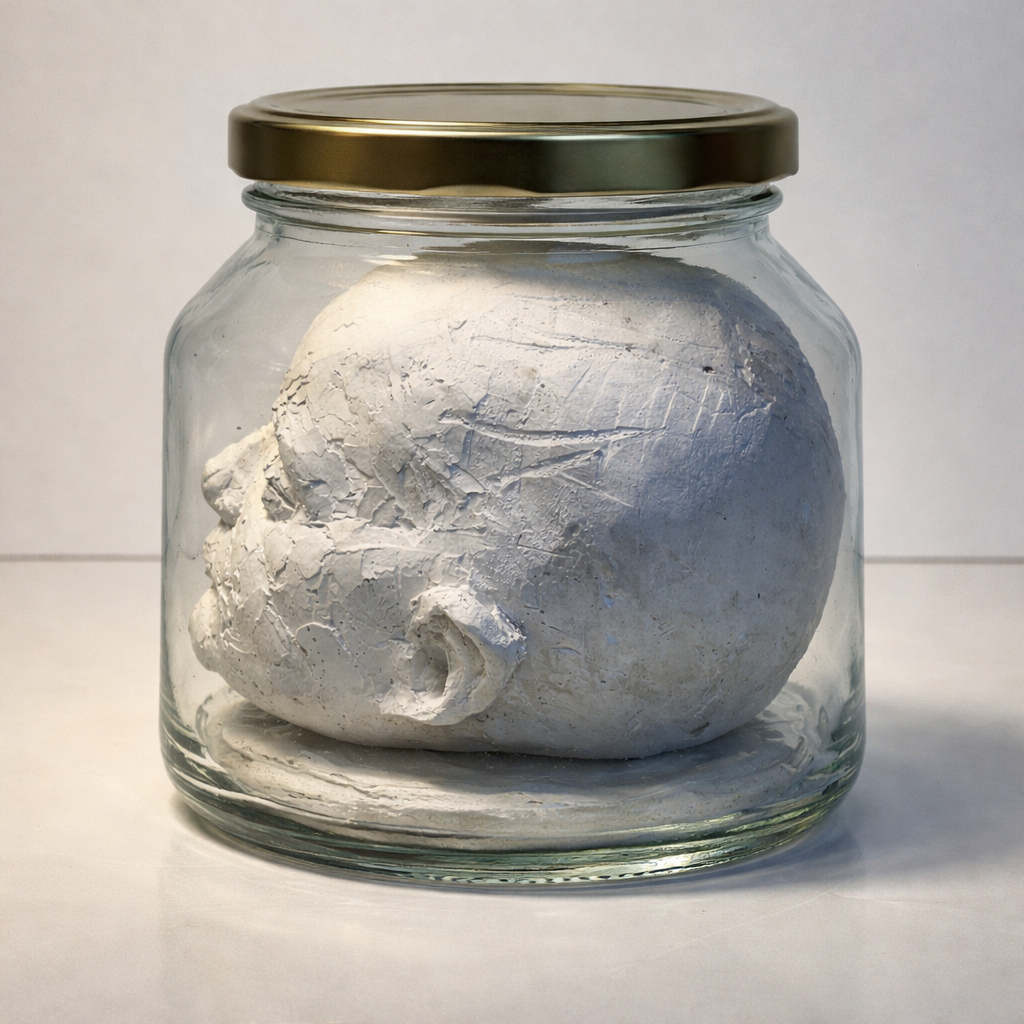
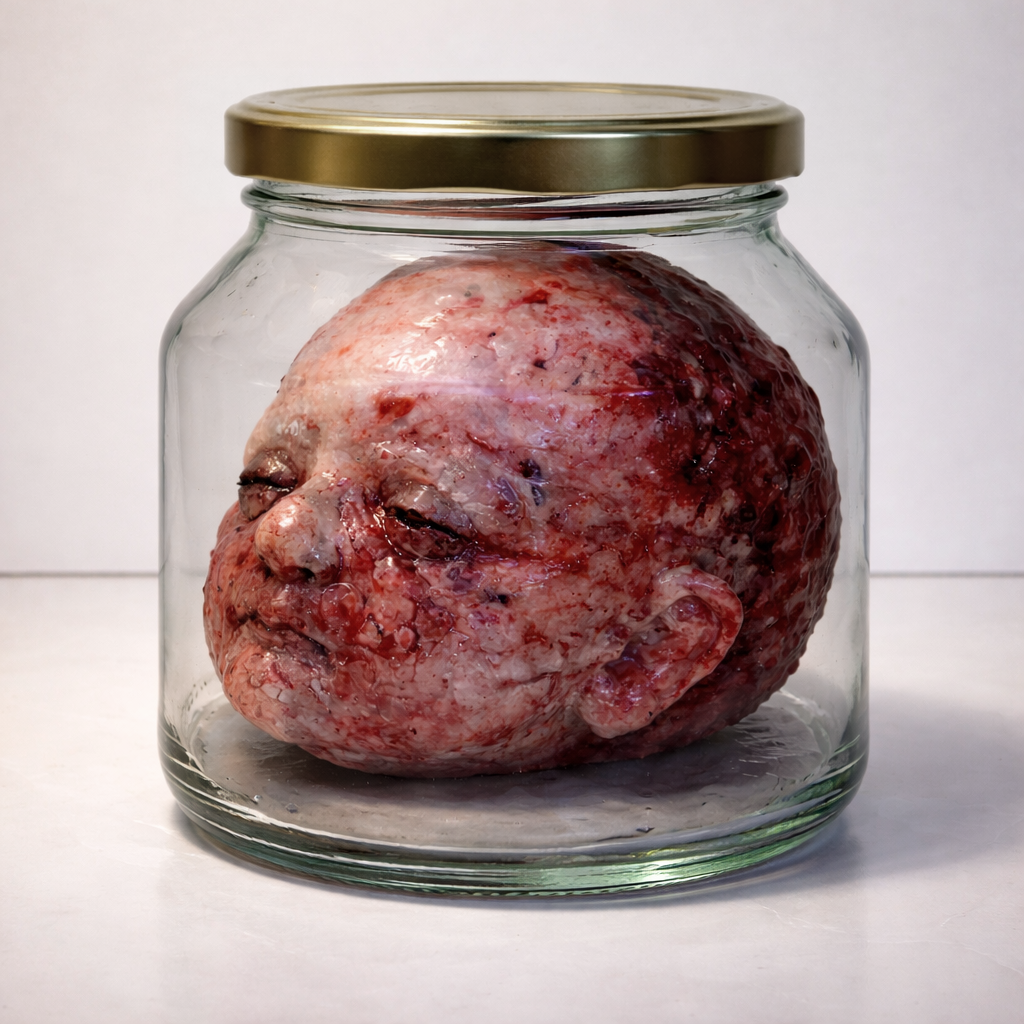
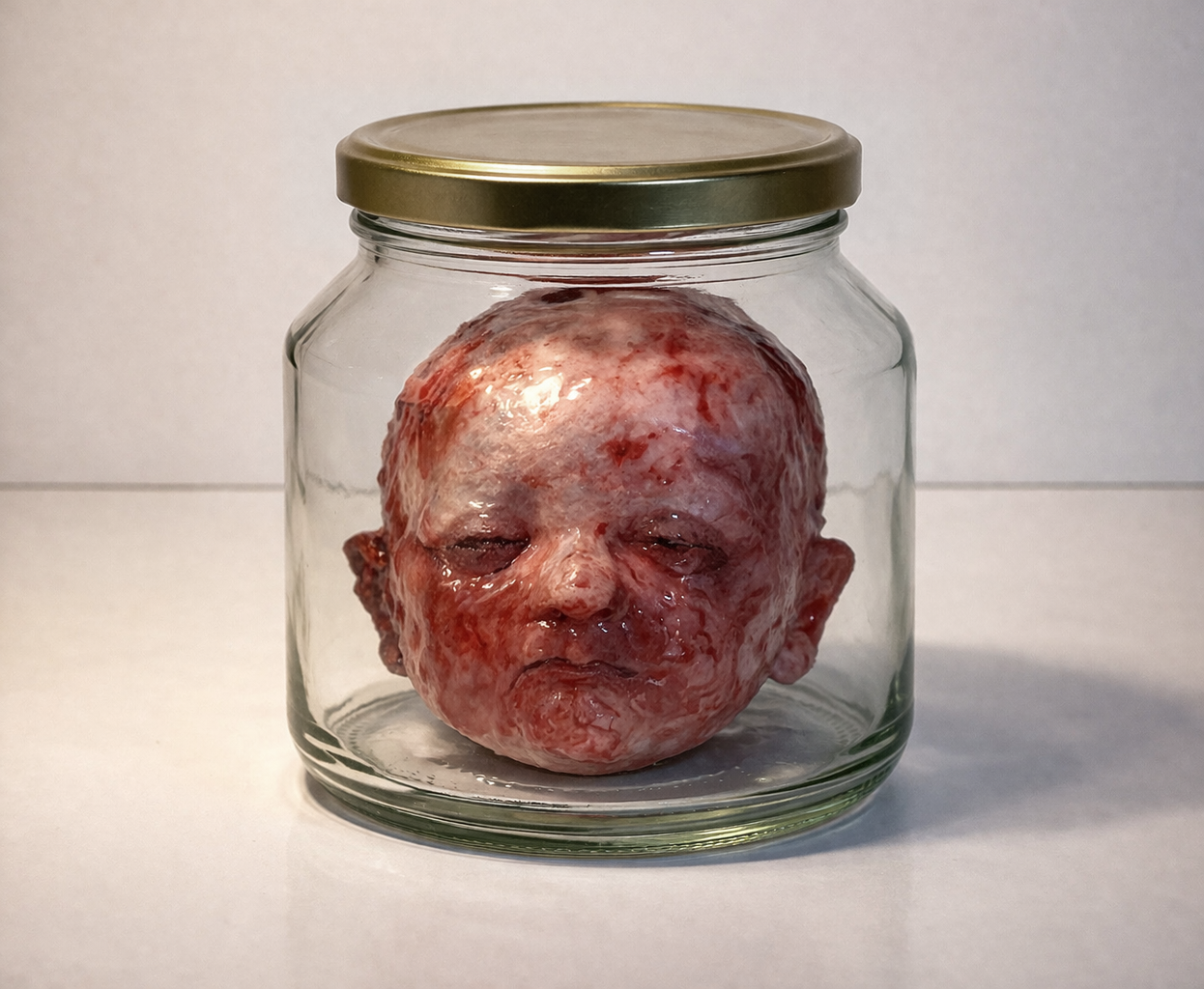
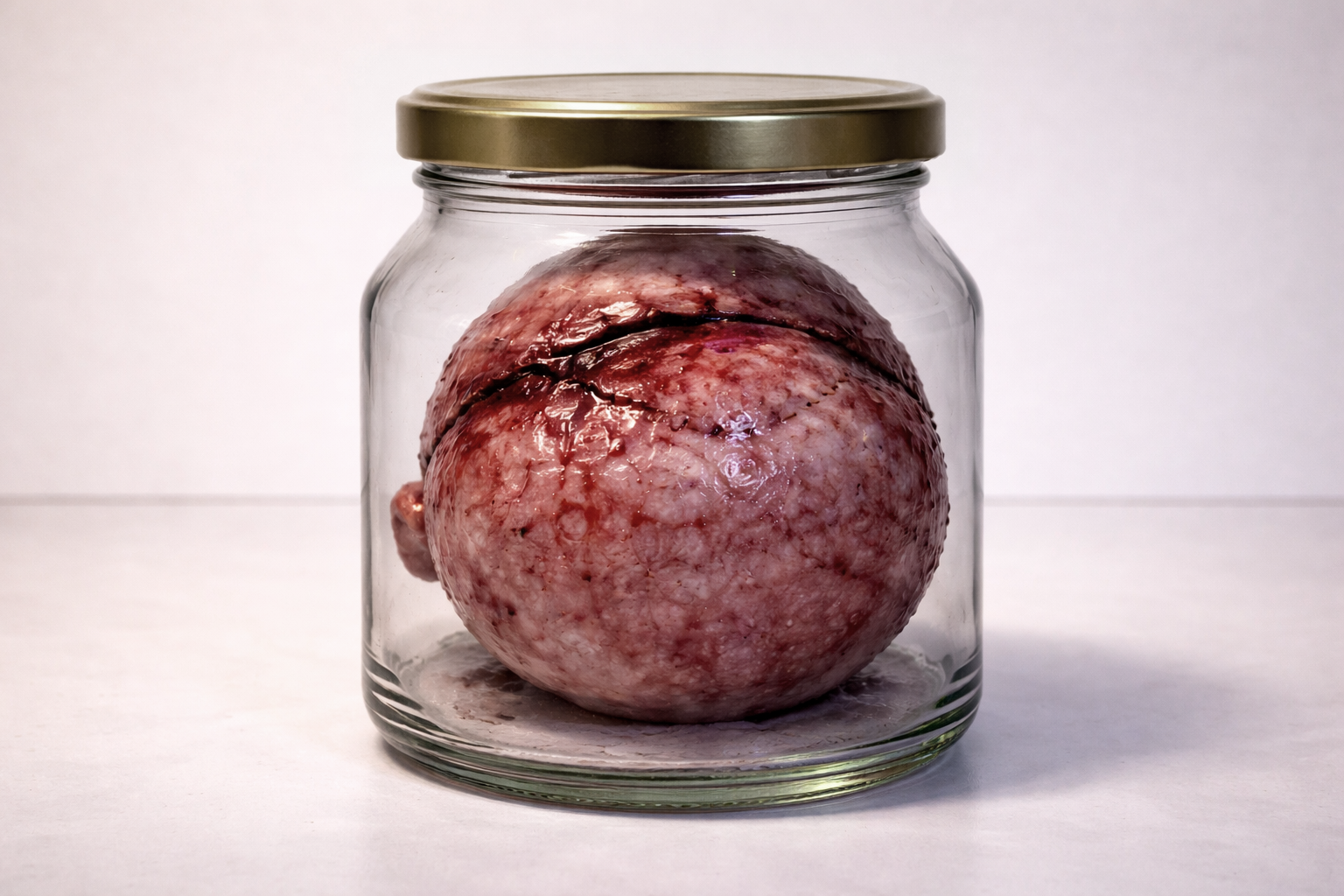
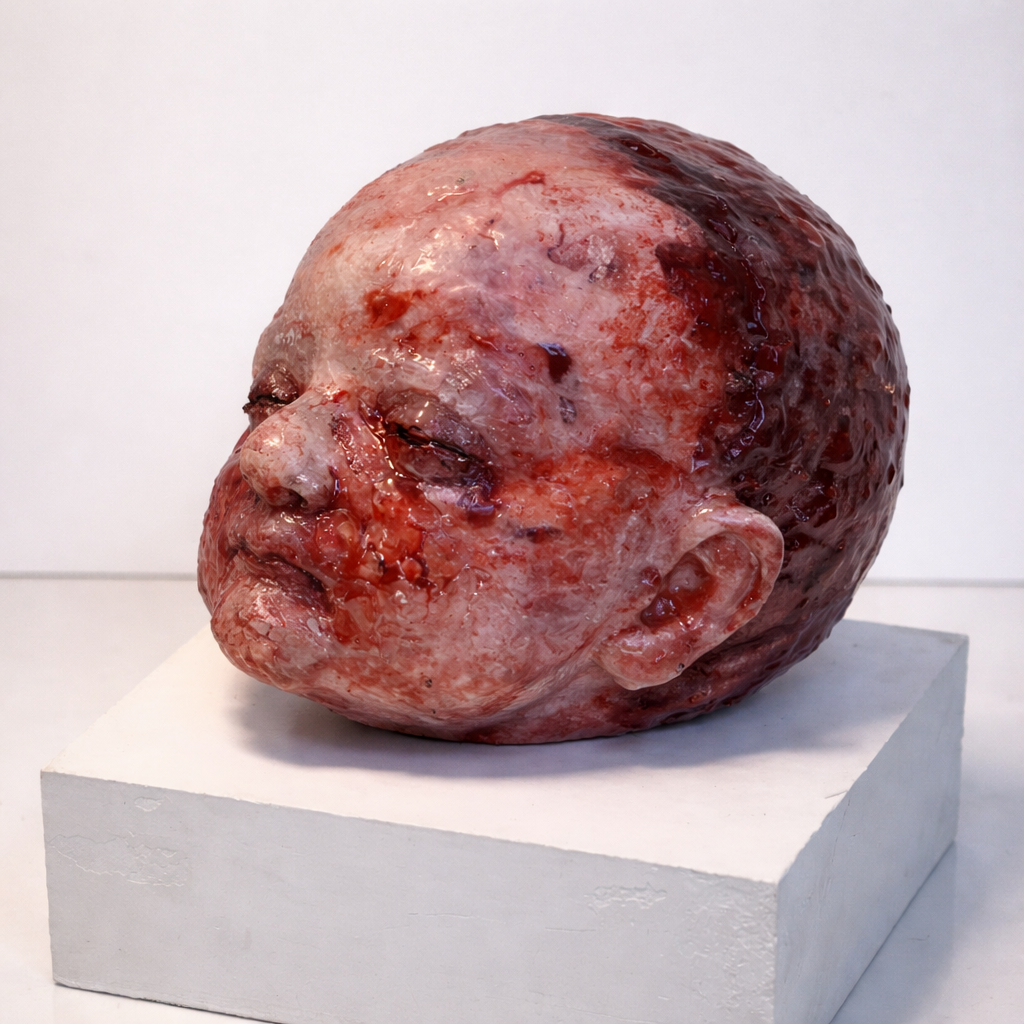
This body of work presents a series of newborn portraits sealed within domestic glass jars—contained, suspended, and removed from any living context. The use of common preservation jars—objects associated with care, nourishment, and everyday domestic routines—introduces a dissonance. These vessels are designed to extend life, to protect and sustain; here, they hold something that cannot be preserved, and should not be contained.
The jars function simultaneously as protective containers and instruments of display. They preserve, but they also isolate. What is held inside is no longer part of the world—it is archived, displaced from its natural condition.
At the core of the work is a material transformation. The portraits shift from flesh-like surfaces toward plaster and concrete, tracing a movement from softness to rigidity, from vulnerability to permanence. What begins as something bodily and alive gradually hardens, losing its elasticity, its responsiveness, its capacity to change. This transition reflects a condition in which life is not only interrupted, but structurally altered—fixed into a state that can no longer evolve.
The use of the newborn form is not symbolic of innocence, but of beginning—a beginning that, within the conditions of war, is immediately interrupted. The body appears before it has entered life, already subjected to containment, already transformed into an object.
Rather than depicting violence directly, the works operate through preservation. They present its aftermath as something stabilized, stored, and made visible.
What remains is not an event, but a condition—where life is held in suspension, and the beginning is already over.